
Tabla Classes · Music Education · Learning
Learning Tabla: A Beginner's Guide to Year One
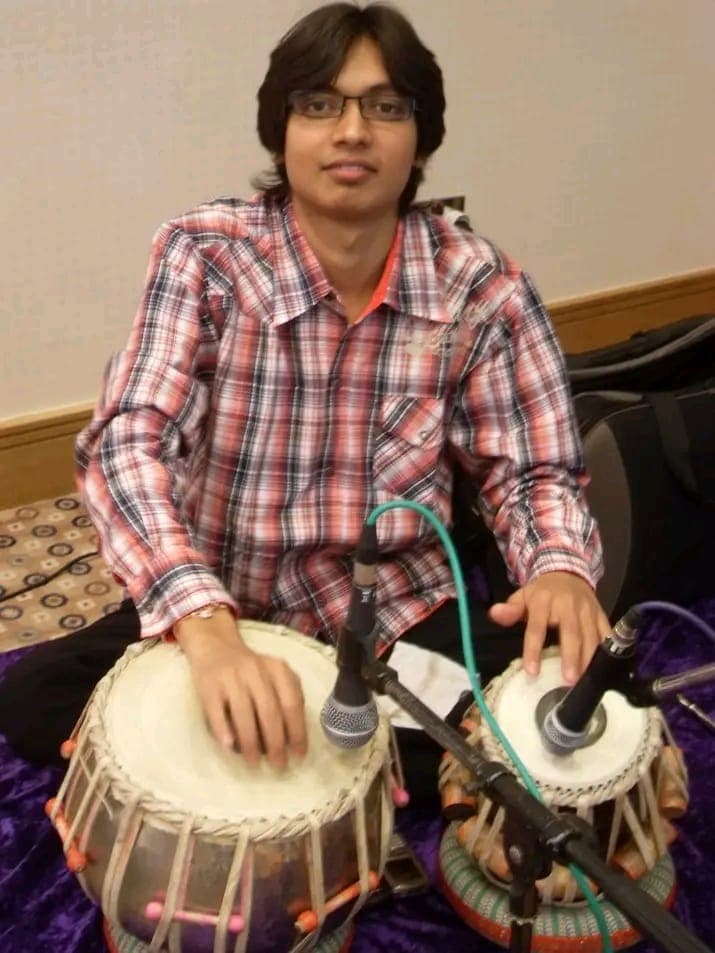
Tabla is one of the most rewarding instruments to learn, but also one of the most physically demanding in the early stages — your hands have to build muscle memory for strokes (bols) that feel completely unfamiliar at first. If you're considering starting, here's a realistic picture of what the first year actually looks like.
Months 1–3: foundations and frustration
The first few months are almost entirely about basic strokes — na, tin, dha, ge — and getting your hand position, wrist angle, and finger placement correct on both the dayan (right drum) and bayan (left drum). Progress here is slow and can feel discouraging; this is completely normal, and it's the stage where consistent short daily practice matters far more than long, infrequent sessions.
Months 4–6: basic theka and rhythm cycles
Once basic strokes are reasonably consistent, students typically move into learning theka — the basic rhythmic pattern for a taal (rhythm cycle), starting with Teentaal (16 beats). This is where tabla starts to feel like music rather than isolated hand exercises, and where a good teacher's live correction becomes especially valuable — subtle timing errors are hard to self-diagnose.
Months 7–12: building repertoire and speed
- Introduction to simple kaydas (rhythmic compositions with variations) built on the theka you've learned.
- Gradual speed building — most students can comfortably play a basic theka at a moderate tempo by the end of the first year.
- First exposure to accompanying a melodic instrument or vocalist, which is a genuinely different skill from solo practice.
Practice habits that actually matter
- 20–30 minutes daily beats 2 hours once a week, every time — muscle memory needs repetition, not marathon sessions.
- Practice with a metronome or taal counting from early on; tabla is fundamentally a rhythm instrument, and timing habits set now are hard to unlearn later.
- Record yourself occasionally. It's uncomfortable, but hearing your own timing and tone is far more useful than assuming you sound the way you think you do.
Adult beginners vs children learning tabla
Adult beginners often progress faster through the conceptual side — understanding taal structure and rhythm theory — but can find the physical hand conditioning more uncomfortable than children do, since young hands adapt to new physical patterns more readily. Children typically need shorter, more frequent practice sessions with a lot of encouragement, while adults can usually sustain longer, more focused sessions but should be patient with soreness and stiffness in the first few weeks, which is a normal part of building the right hand strength and flexibility.
Choosing an instrument: what beginners actually need
A common early question is whether to buy a traditional wooden-shell dayan and metal bayan or start on a more affordable practice set. For genuine beginners, a decent entry-level set is completely fine for the first several months — what matters far more at this stage is consistent tuning and a teacher who checks your set-up periodically, since a poorly tuned tabla makes it much harder to develop accurate pitch sense. Upgrading to a higher-quality instrument makes more sense once you're a few months in and can actually hear the difference it makes.
What a first lesson actually looks like
A first tabla lesson rarely involves playing a recognisable rhythm at all. Expect to spend most of it on posture — how the tabla sits in front of you, how your wrists and forearms are angled — and on isolating individual strokes one at a time, often without even combining two strokes in sequence yet. This can feel slow if you're expecting to play something immediately, but rushing past this stage is the single most common reason students develop tension or incorrect hand position that takes far longer to unlearn later than it would have taken to build correctly from the start.
One-on-one vs group classes: which suits a beginner better
One-on-one classes let a teacher catch and correct subtle timing or hand-position errors immediately, which matters most in the first few months when bad habits are easiest to form and hardest to notice yourself. Group classes are often more affordable and add a social, motivating element, and can work well once basic strokes are reasonably solid and a student is ready to start playing alongside others. Many students start one-on-one for the first few months and move into a group setting once foundations are in place.
Common early mistakes that slow progress
- Practising fast before strokes are clean — speed should follow accuracy, not replace it.
- Skipping taal counting and relying on 'feel' alone, which makes timing errors much harder to self-correct later.
- Long gaps between practice sessions, which forces the hands to relearn muscle memory from scratch each time rather than build on it.
- Comparing your pace of progress to other students rather than to your own baseline — tabla progress is genuinely uneven and depends heavily on prior musical exposure.
What to look for in a tabla teacher
Formal qualifications like a Visharad matter, but for a beginner, teaching style matters just as much as the teacher's own playing ability — someone who performs beautifully isn't automatically good at explaining hand position to a first-time student. Look for a teacher with genuine experience teaching absolute beginners specifically, not just advanced students, and ask whether they offer a trial class before you commit to a longer course. A teacher's patience during the slow, frustrating first few months often matters more to whether a student sticks with tabla long-term than any other single factor.
Signs you're ready to move beyond the basics
Most teachers look for a few signs before introducing more advanced kaydas or a second taal: your basic theka stays steady even when you're momentarily distracted or talking, your hand position no longer needs constant correction, and you can maintain a consistent tempo without a metronome for at least a minute or two. These usually appear somewhere in the second half of the first year for students practising consistently, though the exact timing varies genuinely from student to student.
Crystal Beats Music Academy in Nadiad offers one-on-one and group Tabla classes for beginners through advanced students, alongside Keyboard, Octapad, and Congo. If you're ready to start, or want to sit in on a trial session, get in touch using the details below.
Frequently Asked Questions
What should I expect in my first year of learning tabla?
Months 1–3 focus on basic strokes and hand position, months 4–6 introduce theka (rhythm cycles) starting with Teentaal, and months 7–12 build repertoire, speed, and first accompaniment experience.
How often should a beginner practice tabla?
20–30 minutes daily is more effective than a longer once-a-week session, since muscle memory needs regular repetition rather than marathon practice.
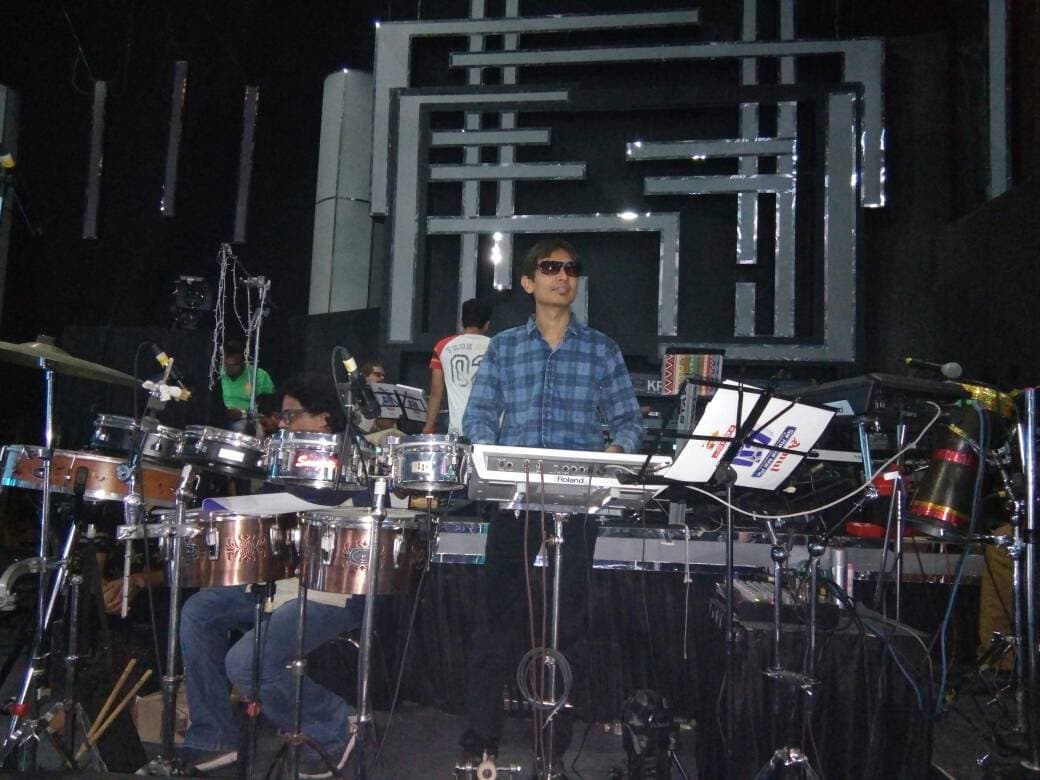
Written by Mrugesh Shukla, Tabla Visharad (distinction) and founder of Crystal Beats — 18+ years leading live performances and teaching at Crystal Beats Music Academy since 2007.
The guidance in this guide reflects real experience performing and teaching across Gujarat since 2007 — not generic advice.
In partnership with Rivavya Create and Trade LLP.
More from the blog

Garba Night Abroad: Bringing Authentic Gujarati Garba to Your NRI Sangeet
Garba at an NRI sangeet abroad can fall flat without a live dhol and a band that knows how to read an out-of-practice crowd. Here's how to get it right.
Booking an Indian Wedding Band From India for Your NRI Wedding Abroad
Flying a live band in from India for a UK, US, or Canada wedding takes different planning than a local booking. Here's the practical guide — lead times, logistics, and what to ask.
Questions to Ask a Band Master Before You Book
A quick checklist of questions to ask before confirming your wedding or event's band master — covering experience, instrument range, and logistics.